Pants for more than a brief moment.
Most pants don’t fail because of style—they fail because they don’t integrate. You buy them for a specific look, but they don’t translate across your day-to-day outfits.
A repeat-wear pair is defined by how many combinations it supports with what you already own. This capsule focuses on that: selecting pants based on how they function across outfits, not how they look in isolation.
The Base Pair: Straight or Slightly Relaxed Pants
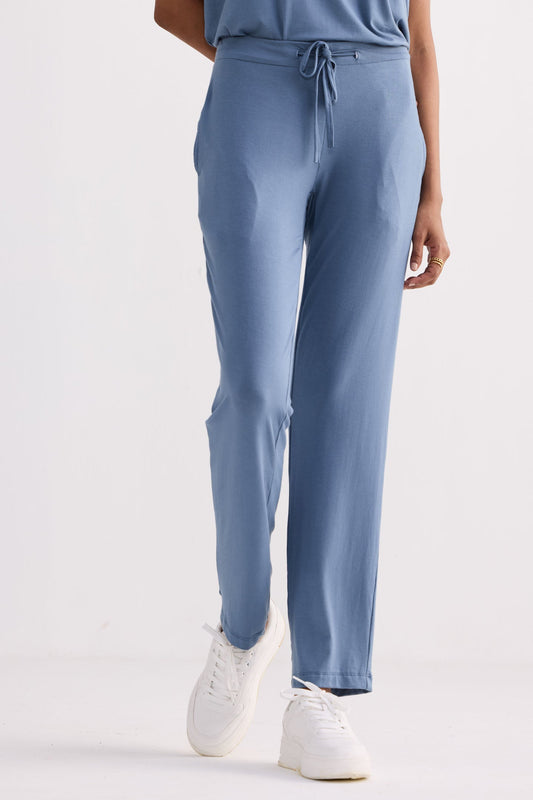
Start with a silhouette that doesn’t compete with the rest of your wardrobe. Straight-leg or slightly relaxed pants tend to work across the most scenarios.
Outfit combinations
- White tee + sneakers → low-effort daily wear
- Knit sweater + flats → transitional or office casual
- Button-down + loafers → structured but not formal
These combinations work because the pants don’t dictate the outfit—they adapt to it.
You’ll typically find these silhouettes in collections like:
Why this works: Neutral structure creates high compatibility with tops, shoes, and layers.
The Volume Piece: Barrel Jeans or Wide-Leg Pants
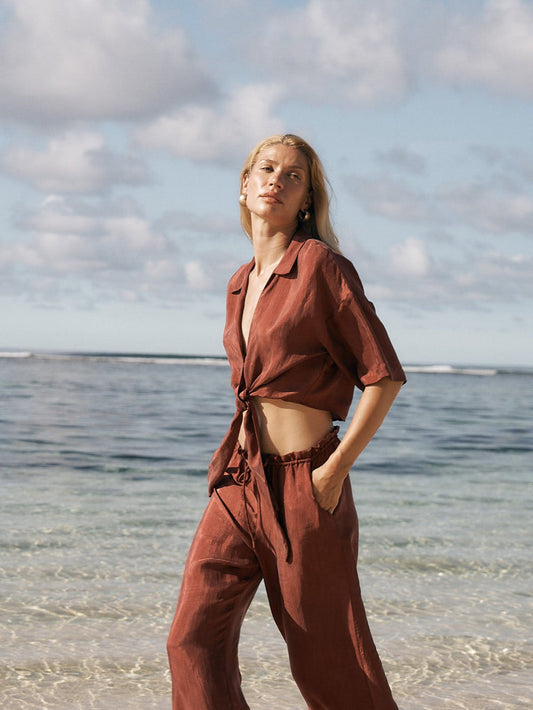
Barrel jeans and wider cuts (wide leg pants for pear shape) introduce shape. They don’t replace your base pair—they expand your range.
Think of how figures like Sydney Sweeney approach denim: even when the cut is directional, the styling remains simple and controlled.
Outfit combinations
- Fitted tank + sandals → balances volume
- Cropped knit + ankle boots → defines waist
- Simple tee + structured jacket → keeps proportions clean
Explore similar silhouettes here:
Constraint to accept: These pants won’t work with everything, but they should still support at least 2–3 outfits you already wear.
The Soft Pair: High-Comfort Everyday Pants
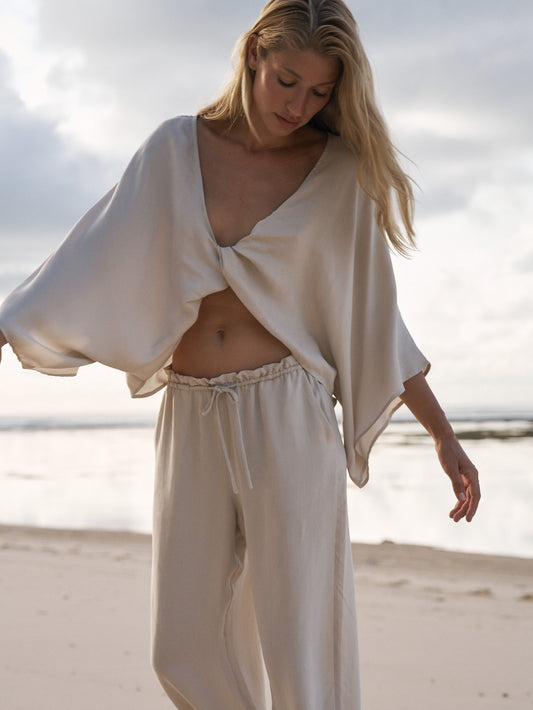
This is the pair you default to when you don’t want to think. Usually softer fabrics, relaxed tailoring, or flexible waistlines.
Outfit combinations
- Oversized shirt + slides → at-home or errands
- Fitted tee + sneakers → casual outside
- Light cardigan + flats → simple but composed
Browse options here: Best sustainable pants for women
Why this matters: Without a “no-decision” pair, you end up overusing pieces that weren’t designed for that frequency.
The Adjustment Layer: Hemming and Fit Corrections
Most pants become truly wearable after small adjustments.
Hemming
- Full length → works with heels or boots
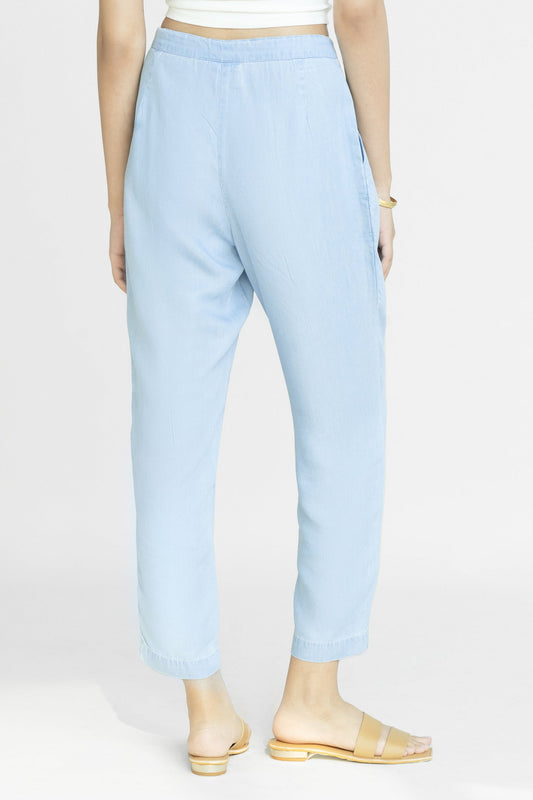
- Cropped → better for flats and sneakers
- Incorrect length → immediately limits outfit combinations
Patching
Especially in denim, patching extends lifespan and often improves wearability. Brands like Still Here jeans have normalized visible repair as part of the garment’s evolution.
Impact on styling:
- A hemmed straight pant works across multiple shoe types
- A repaired denim pair becomes easier to wear casually without looking worn out
Rotating the Capsule: 3-Pant System
A functional rotation doesn’t require many pieces—it requires distinct roles:
- Structured neutral (straight or tailored)
- Volume or statement (barrel or wide-leg)
- Comfort-first (soft, relaxed)
Each one should connect to at least 2–3 outfits already in your wardrobe.
Example rotation
- Weekdays → structured pair
- Errands / casual days → soft pair
- Selective styling days → volume piece
This reduces over-reliance on a single type and increases total wear across all pieces.
What to Eliminate Immediately
- Pants that only work with one top
- Pairs that require constant adjustment
- Items you haven’t worn in over two weeks
These are not styling issues—they are selection errors.
How to Choose Pants Based on Body Shape (Without Overcomplicating It)
Most “body type guides” overcorrect. They give rigid rules that don’t translate into real outfits. The goal here is simpler: choose shapes that reduce friction when you get dressed.
If you carry more volume in your midsection (apple shapes):
- Go for flat-front pants or straight cuts
- Avoid heavy pleating around the waist
- Look for mid-rise or slightly lower-rise if high-rise feels restrictive
→ This keeps the waist area clean and easier to style with both fitted and relaxed tops
If your hips and thighs are more defined (pear shapes):
- Choose wide-leg or relaxed straight pants
- Keep the fabric structured but not stiff
- Darker tones or minimal detailing on the hip area increase versatility
→ These pair easily with simple tops without creating imbalance
If your waist is more defined (hourglass or inverted triangle):
- Look for pants that cinch at the waist (tailored or pleated styles)
- Barrel jeans or wider cuts can work well here
→ These shapes maintain proportion without needing complex styling
If your frame is more straight (rectangle shapes):
- Add shape through volume (barrel, pleats, or wide-leg)
- Or keep it minimal with straight-leg for maximum outfit flexibility
→ The decision depends on whether you want structure or simplicity
What actually matters:
You’re not trying to “correct” your body. You’re trying to choose pants that:
- Work with at least 3 outfits you already wear
- Don’t require constant adjustment
- Don’t limit your shoe options
If a pair checks those boxes, it’s already doing more than most “perfect fit” recommendations ever will.
In summary ...
Choosing pants you’ll wear repeatedly is not about finding better designs—it’s about building compatibility.
Once each pair supports multiple outfits without effort, repetition becomes a system, not a compromise.